24 Aug 2026
Device Variations and Regional Policies Redefining Baccarat Bonus Structures
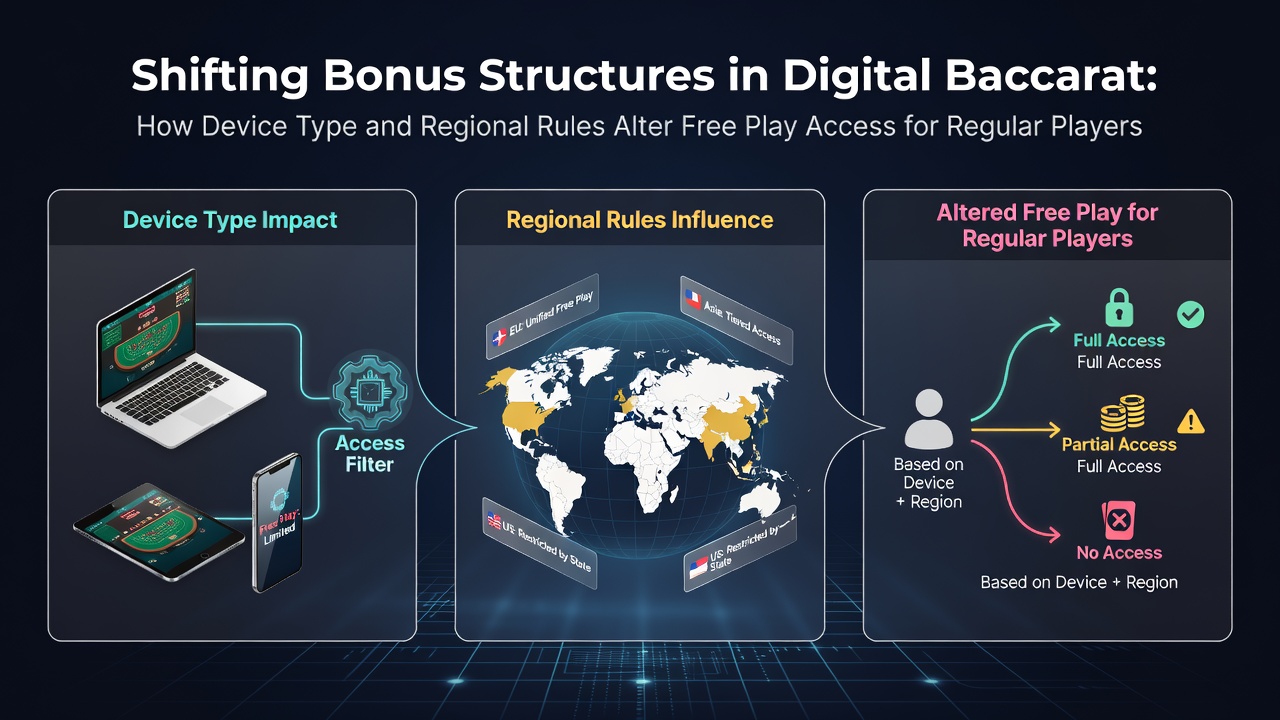
Digital baccarat platforms continue to adjust bonus structures based on device type and jurisdictional requirements, which directly affects how regular players access free play credits and promotional rewards. Data from industry monitoring services shows that mobile applications often carry different wagering multipliers than desktop versions, while regional licensing frameworks impose additional restrictions on bonus eligibility. Observers note that these variations emerged more prominently as operators expanded cross-border offerings in 2025 and 2026.
Device Type as a Determinant of Bonus Parameters
Platform architecture influences bonus availability because mobile interfaces process player data differently than desktop environments, leading to distinct qualification thresholds. Research from gaming analytics firms indicates that mobile sessions frequently trigger bonus offers tied to shorter play intervals, whereas desktop play tends to accumulate toward larger reward tiers over extended periods. Those who track player behavior patterns report that device detection algorithms adjust contribution rates automatically, altering how quickly free play credits become accessible.
Operators implement these distinctions to comply with technical standards set by licensing authorities, and regular players encounter the effects when switching between devices mid-session. Figures from multiple platform audits reveal that mobile users sometimes receive reduced free play allocations because session data fragments across app updates and network changes, while desktop environments maintain more stable tracking.
Regional Rules Shaping Free Play Eligibility
Jurisdictional regulations further modify bonus access by establishing specific conditions for promotional offers in digital baccarat. Licensing bodies in different regions enforce varying contribution percentages and validity periods, which operators must embed into their systems to maintain compliance. Data compiled through 2026 shows that certain European frameworks require higher minimum deposits before free play activates, whereas North American jurisdictions often emphasize time-bound usage windows that reset monthly.
In August 2026, updates to technical compliance guidelines in select markets prompted several major platforms to recalibrate bonus structures, particularly for players accessing games through tablets and smartphones. These changes reflect ongoing efforts to align promotional mechanics with local consumer protection standards, resulting in noticeable differences in how free play credits appear across player accounts.
Combined Effects on Regular Player Access
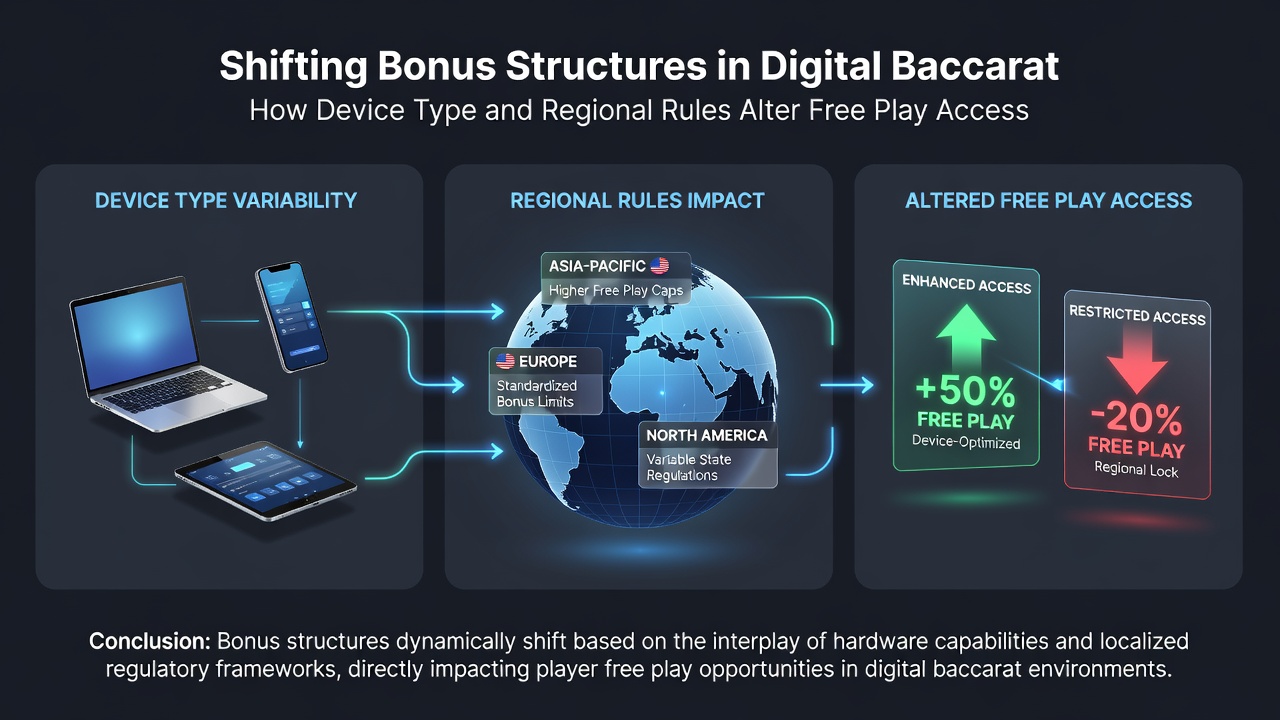
When device type intersects with regional requirements, regular players experience compounded limitations on bonus retrieval. Studies from research institutions tracking digital gaming metrics demonstrate that a player using a mobile device in one jurisdiction may face stricter wagering demands than the same individual accessing the platform via desktop in another location. These layered conditions affect the practical value of free play offers, as operators adjust parameters to satisfy both technical and regulatory constraints simultaneously.
Industry reports note that such adjustments occur through backend configurations rather than visible marketing changes, leaving many regular participants to discover variations only after attempting to claim rewards. Data from platform performance reviews confirms that cross-device consistency remains a challenge, particularly when regional rules mandate unique verification steps for mobile sessions.
Implementation Patterns Across Major Markets
Operators respond to these dual pressures by developing segmented bonus systems that differentiate based on detected device and registered jurisdiction. According to information released by the Malta Gaming Authority, licensed entities must document device-specific rules in their operational filings, creating a transparent record of how bonuses vary. Similar documentation requirements appear in frameworks overseen by Canadian provincial regulators, where monthly compliance submissions detail adjustments to free play access.
Those monitoring industry trends observe that platforms serving multiple regions maintain separate bonus ledgers to prevent conflicts between differing rule sets. This approach allows operators to deliver region-appropriate offers without violating licensing terms, though it increases administrative complexity for tracking regular player activity across accounts.
Conclusion
Device type and regional regulations continue to drive measurable shifts in digital baccarat bonus structures, altering the pathways through which regular players reach free play opportunities. Evidence from regulatory filings and platform data indicates these modifications will persist as operators refine systems to meet evolving technical and jurisdictional demands. Players navigating these environments encounter access conditions that depend on both their chosen device and the licensing framework governing their account.